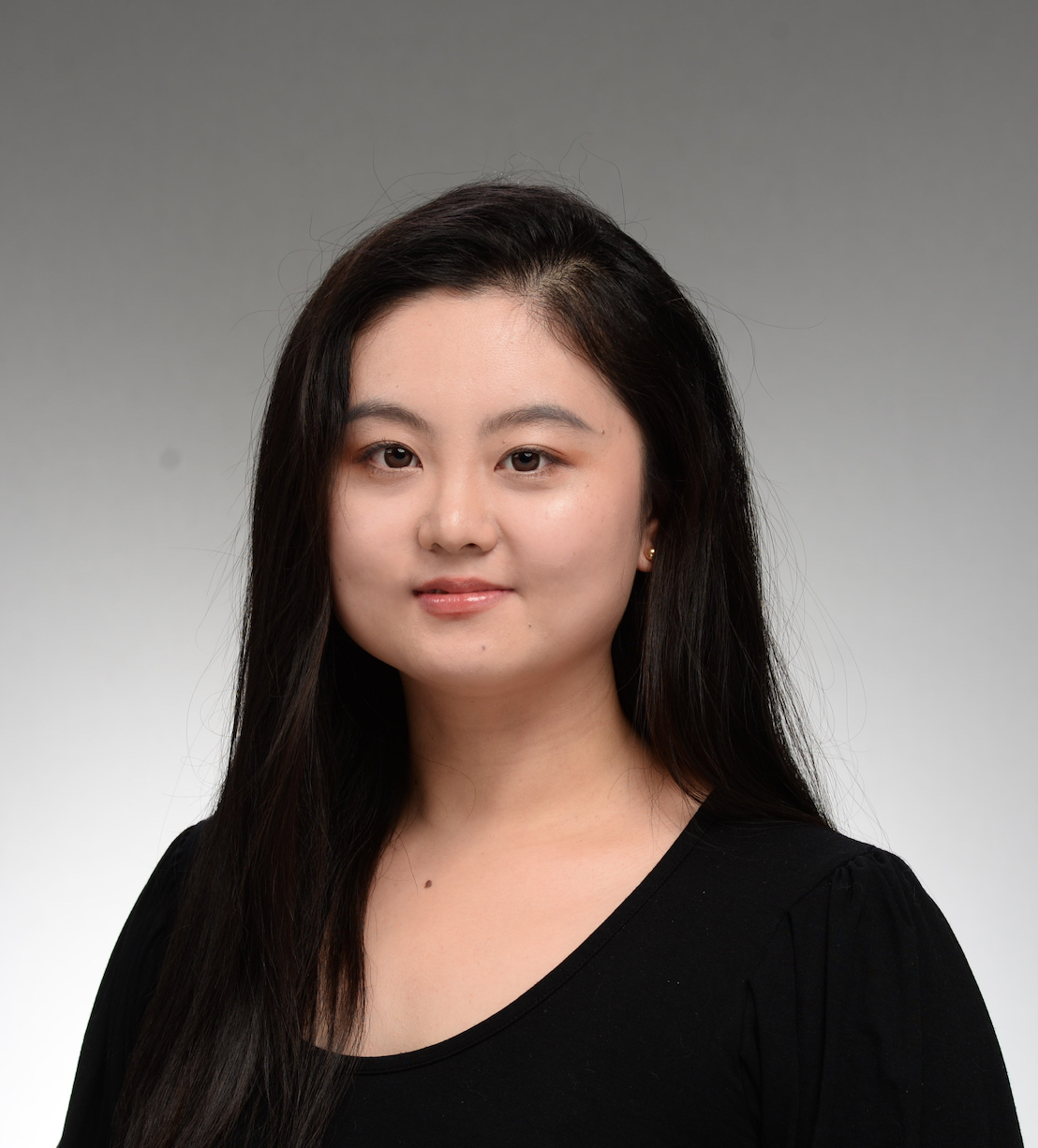
I am a postdoctoral fellow in Responsible AI in Education at the University of Notre Dame, affiliated with Notre Dame Learning, the Lucy Family Institute for Data & Society, and CSE. My current postdoctoral mentors are Prof. Nitesh V Chawla and Ronald Metoyer. I also work with Alison Cheng on learning analytics and measurement.
Research Interests: I am a mixed-method researcher in human-computer interaction and AI in education, focusing on designing, implementing, and evaluating experiences, tools, and curricula that enhance the novelty, effectiveness and equity of teaching and learning in an AI-driven world. I publish in venues such as CHI, CSCW, DIS, ISLS, AIED, and Computers & Education: AI. My work spans higher education, K–12, and special education contexts. I am strongly committed to developing and advancing design methods and processes in interaction design that enable meaningful engagement with diverse stakeholders and adapt to evolving technological contexts.
I obtained my PhD at the University of Illinois Urbana-Champaign (UIUC), School of Information Sciences, advised by Prof. Yun Huang in 2024. I also worked closely with Prof. JooYoung Seo, Prof. Kyungwon Koh from UIUC on K-12 computational thinking, and Prof. Raja Kushalnagar from Gallaudet University. I earned my B.S. in Mechanical Engineering, focusing on Mobility and Design, from Tsinghua University in 2019. I also worked with Prof Eric J. Perreault at Shirley Ryan Ability Lab, Northwestern University (Chicago), on rehabilitation.
I have practical experience working in special education schools and faculty development programs, and spent two years as a learning designer for K–8 STEM programs before starting my Ph.D.
Fun Fact: My name Chen Si (陈思) means thoughtful 🤔 in Chinese.
News (updated May 1):
I will be organizing a workshop at the Festival of Learning 2026 (ACM Learning@Scale and AIED) on
Responsible AI for STEM Career Development at Scale in K-16 Education [Link]
I will also stay for ICML'26 in South Korea to discuss Using Education Theories and Models to boost LLM Evaluation Efficiency: [Link] (Spotlighted-top 2.2%) - Congrats to my collaborators!
See you in South Korea!
Vision: I am interested in how AI can augment fundamental aspects of teaching and learning—such as student engagement, content creation, self-regulation, meta-cognition—while introducing and addressing emerging challenges in the age of generative AI, such as the limitations of common assessment methods, unreliability in AI-detection tools and AI literacy development.
Selected Recent Publication
AI for Teaching and Learning
How can AI follow pedagogical best practices that supports meaning learning, such as scaffolding, reasoning and reflection?
How can human-AI collaboration improve learning and teaching effectiveness and innovation?
Bridging the AI Adoption Gap: Designing an Interactive Pedagogical Agent for Higher Education Instructors (AIED ’25) [Link]
Emotion Recognition in Self-Regulated Learning: Advancing Metacognition Through AI-Assisted Reflections (CSCW ’23) (Book Chapter in Trust and Inclusion in AI-Mediated Education) [Link]
BloomQA: Automated Benchmark Generation from Domain Guidelines Using Bloom’s Taxonomy (under review)
Inclusive and Ethical AI in Education and Communication
How can AI support or hinder education equity across diverse sociocultural contexts?
How can multimodal AI foster learning experiences, outcome and extend learning theories for various learner populations?
Inclusive Emotion Technologies: Addressing the Needs of d/Deaf and Hard of Hearing Learners in Video-Based Learning (CSCW ’25) [Link]
Customizing Generated Signs and Voices of AI Avatars: Deaf-Centric Mixed-Reality Design for Deaf-Hearing Communication (CSCW ’25) [Link]
Towards Inclusive Video Commenting: Introducing Signmaku for the Deaf and Hard of Hearing (CHI ’24) [Link]
AI Literacy Tools and Programs for K-12, Higher Ed and Workforces
How can AI literacy education programs and interventions be developed across different populations and ages?
How can we measure AI literacy in context as an emerging concept in accurate and novel ways?
From Scores to Careers: Understanding Chinese Family Use of AI to Support Decision-Making of College Applications (CHI ’25) [Link]
Teaching the Teachers: Building Generative AI Literacy in Higher Ed Instructors (under review) [Link]
Understanding Parents’ Perspectives on Responsible AI for Children’s Self-Directed Learning (CHI'26) [Link 1] [Link 2]
Social Media Studies